
Category Workforce Development

Employee development in Rush County through on-the-job training

Your Next Great Hire May Already Work for You: Building Talent From Within

Your Next Great Hire May Already Work for You: Building Talent From Within

Employee development in Rush County can be just as important as recruiting new workers. When employers need additional skills, supervisors or people prepared to take on more responsibility, the first place to look may be inside their own organization.

Hiring will always be an important part of workforce development. But employers also have another valuable workforce strategy: developing the people they already have.

That can mean helping an entry-level employee gain new technical skills, preparing an experienced worker for a leadership role, creating clearer career pathways or giving employees opportunities to advance as the needs of the business change.

For employers, that isn’t simply training.

It’s workforce development.

Why Employee Development in Rush County Matters

Every employee who gains a new skill adds capacity to an organization.

Developing current employees can help businesses build the skills they need while creating opportunities for workers to advance without leaving the company—or the community—to find their next opportunity.

It can also help employers think differently about workforce shortages.

Instead of asking only, “Where can we find someone who already has every skill we need?”, another useful question is:

“Who do we already have that could grow into this role?”

Sometimes the strongest candidate for tomorrow’s opening is already on today’s payroll.

Career Pathways Don’t Have to Be Complicated

Creating opportunities for advancement doesn’t necessarily require a large formal program.

Employers can begin by looking at positions that are difficult to fill or skills that are becoming increasingly important.

Consider questions such as:

  • Which positions are hardest for us to recruit?
  • Which employees have demonstrated the ability to take on more responsibility?
  • What skills would someone need to move from an entry-level position into a more advanced role?
  • Are experienced employees approaching retirement who hold knowledge that needs to be transferred?
  • Could training help an existing employee fill a future need?

Those conversations can turn workforce planning from a reaction to a vacancy into preparation for one.

Indiana Is Encouraging Employers to Grow Their Own Talent

Indiana is also placing increased emphasis on developing workers who are already employed.

The Indiana Department of Workforce Development’s Power Up Indiana initiative encourages employers to build employee skills and career pathways and includes an employer incentive component. DWD describes the initiative as a way for businesses to develop existing talent while supporting wage growth and advancement.

Employers interested in the program should review current requirements directly with DWD before making training or financial decisions, because eligibility and reimbursement requirements apply.

Learn about Power Up Indiana through Indiana DWD

Power Up Indiana isn’t the only workforce resource available to employers. Depending on the business, employee and type of training involved, other state or workforce programs may also be worth exploring.

Start With the Workforce Need

The most useful starting point isn’t necessarily asking, “What grant can I get?”

Start with the business problem.

Maybe you need more skilled operators.

Maybe you’re having difficulty developing frontline supervisors.

Maybe technology is changing the skills required for a position.

Maybe you have a strong employee who is ready for more responsibility but needs additional training.

Once the need is clear, ECDC and workforce partners can help determine whether there are resources or connections worth exploring.

Employee Development in Rush County Starts From Within

Recruitment gets a lot of attention because vacancies are easy to see.

Employee development can be less visible, but it is an important part of building a resilient workforce.

A worker who sees an opportunity to learn, advance and build a career has a reason to imagine a future with that employer.

A business that continually develops its people builds skills it can draw on as needs change.

And when Rush County businesses and workers grow together, the entire community benefits.

Is your business thinking about training, advancement, succession planning or another workforce challenge?

Rush County ECDC can help you identify workforce resources and connect with the appropriate partners. Start by telling us what your business is trying to accomplish.
Rush County workforce and economic development

What the Latest Workforce Data Tells Us About Rush County

The latest Rush County workforce data provides a new snapshot of local employment, wages and the businesses that employ our workforce.

According to data released September 4 by the U.S. Bureau of Labor Statistics, Rush County had 428 covered establishments and 4,972 covered jobs in March 2026. The county’s average weekly wage during the first quarter of 2026 was $1,016.

Those numbers are more than statistics. They help provide context for the economic and workforce development work happening throughout Rush County.

Understanding Rush County Workforce Data

The Bureau of Labor Statistics figures come from the Quarterly Census of Employment and Wages, commonly called QCEW.

The data includes workers covered by state unemployment insurance programs and federal workers covered by the Unemployment Compensation for Federal Employees program. Because of that definition, these numbers should not be interpreted as every person who works or every business operating in Rush County.

Instead, they provide a consistent way to examine employment and wages across communities.

What Rush County Workforce Data Tells Us

Rush County workforce data becomes more useful when we put the numbers into context. Rush County’s first-quarter average weekly wage of $1,016 compares with an Indiana average of $1,356. Statewide, Indiana had approximately 3.16 million covered jobs in March 2026, while the state’s average weekly wage increased 2.7% from the first quarter of 2025.

Rush County is one of Indiana’s smaller employment markets, which makes the strength and competitiveness of individual employers particularly important to the local economy.

For economic development, the goal isn’t simply to increase one number.

A healthy local economy requires businesses that can compete, workers who can build successful careers, a pipeline of future talent, and a community that can attract and retain both employers and residents.

Why Workforce Development Matters

Workforce data also reinforces why economic development and workforce development cannot operate separately.

When an existing employer wants to expand, workforce availability matters.

When a company considers Rush County for a new investment, access to talent matters.

When students make decisions about education and careers, knowing what opportunities exist locally matters.

And when residents are looking for better employment opportunities, connections to employers, training and career resources matter.

That is why Rush County ECDC works across several parts of the talent pipeline—from helping employers address current workforce needs to connecting residents with employment resources and helping students gain exposure to local careers.

Building for the Future

Rush County workforce data from a single quarter doesn’t tell the entire story of our local economy, and preliminary federal data can be revised.

What it does give us is another useful benchmark.

As Rush County works to attract investment, support existing businesses and strengthen its talent pipeline, tracking employment and wage data helps us better understand where we are—and where opportunities exist to keep moving forward.

Rush County ECDC will continue working with employers, educators, workforce partners and community leaders to help build a stronger local economy and create opportunities for the people who call Rush County home.

Source: U.S. Bureau of Labor Statistics, Quarterly Census of Employment and Wages, First Quarter 2026. Data is preliminary.

View the September 4 BLS County Employment and Wages report

Rush County talent pipeline students exploring local careers

The Talent Pipeline Starts Before Graduation: How Career Exposure Strengthens Rush County

Building the Rush County talent pipeline requires us to think beyond today’s job openings and look at the young people who will become tomorrow’s workforce. When employers talk about workforce challenges, the conversation often focuses on the people available to hire today.

But building the Rush County talent pipeline means looking further ahead. Our future workforce is already sitting in classrooms.

That is why career exploration, employer engagement and work-based learning are important parts of economic development. Helping young people understand the opportunities available close to home gives students more information when making decisions about education and careers—and gives local employers an opportunity to begin building their future talent pipeline.

Career Awareness Matters Earlier Than We Think

Students make important choices long before they submit their first full-time job application.

They choose classes. They consider college, technical education, apprenticeships and military service. They decide whether they believe they need to leave their hometown to find opportunity.

Those decisions are influenced by what students know.

A young person can live near a business for years without knowing what happens inside the building, what occupations exist there, what education those jobs require or what a career path with that employer might look like.

Creating direct connections between students and employers helps close that information gap.

Building the Rush County Talent Pipeline

Career-connected learning isn’t a new idea in Rush County.

Rush County Schools received national attention earlier this year when Business View Magazine highlighted the district’s approach to education and community partnerships. The February 2026 feature described several ways students are connecting education with career preparation, including healthcare credential opportunities and on-the-job experience through the district’s Interdisciplinary Cooperative Education program.

Those experiences matter because career exploration becomes much more meaningful when students can connect what they learn in school with an actual occupation.

The same principle is behind initiatives such as Rush County Manufacturing Day.

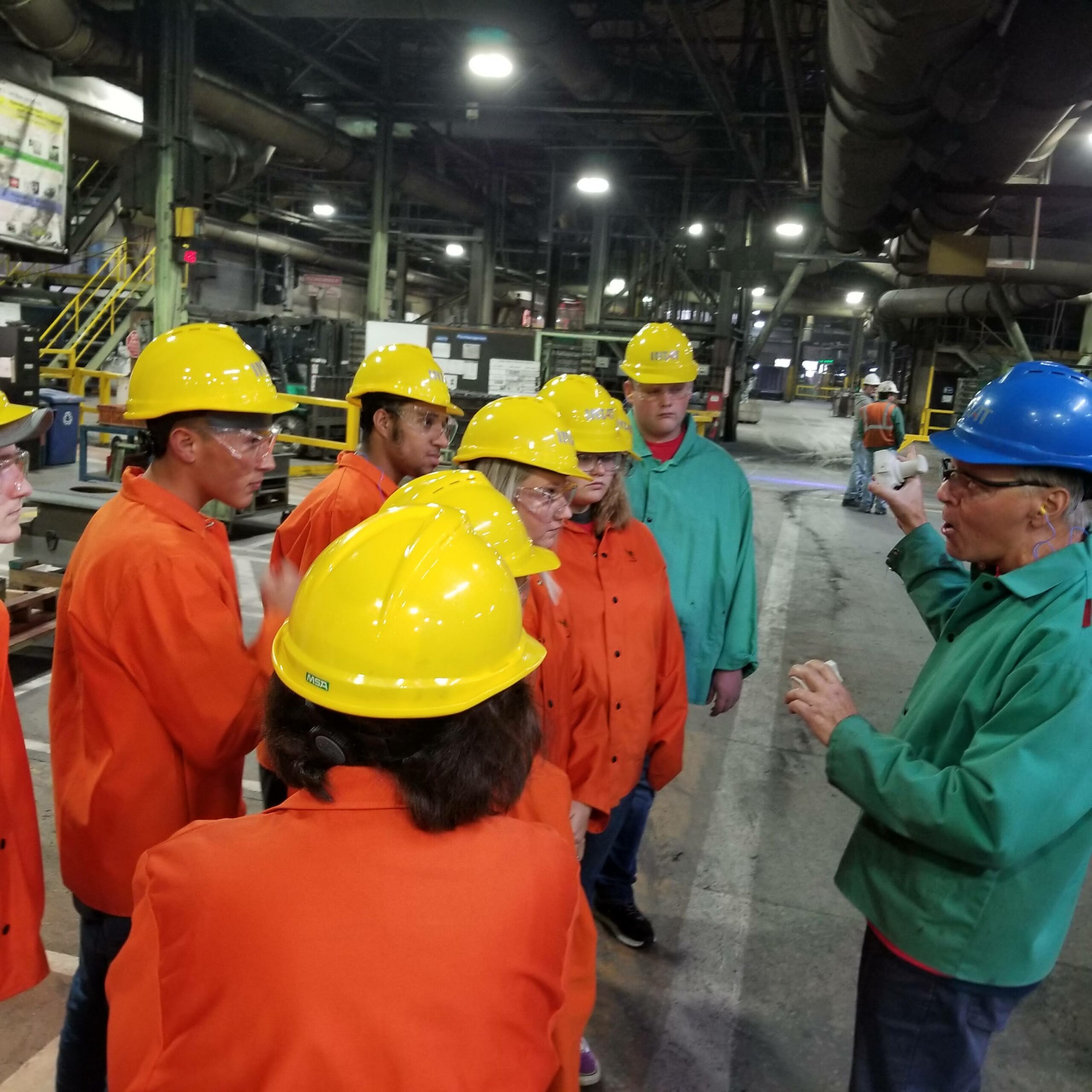
Manufacturing Day gives students an opportunity to step inside local workplaces, meet employees and learn about career pathways they may otherwise never see. Rush County ECDC is again working with local education and employer partners on Manufacturing Day activities in 2026.

Employers Have a Role in Building Their Future Workforce

Employers don’t have to wait until students graduate to participate in workforce development.

There are many ways businesses can help young people better understand the world of work.

Hosting a tour can introduce students to occupations they didn’t know existed.

Speaking to a classroom can help explain which skills employers value.

Providing job-shadowing or work-based learning opportunities can give a student firsthand experience.

Participating in career events can help students connect a company name they recognize with actual careers and the people who perform them.

Even a conversation with an employee can change how a student thinks about a career.

These interactions aren’t necessarily about recruiting a teenager for an immediate opening.

They are about building awareness.

Career Exposure Also Helps Students Make Better Decisions

A strong talent pipeline benefits employers, but students benefit too.

The more students understand about occupations, workplace expectations, education requirements and career pathways, the better equipped they are to make decisions about what comes after high school.

For one student, that may mean a four-year degree.

For another, it may mean technical training, an industry credential, an apprenticeship or entering the workforce.

There isn’t one correct pathway.

The goal is to make sure students know the pathways exist.

Showing Young People They Can Build a Future Here

Talent attraction will always be important to economic development, but communities also have an opportunity to develop and retain the talent already growing up within them.

That starts with visibility.

Young people need opportunities to see local workplaces, meet people building successful careers and understand how education connects to employment.

Employers need opportunities to communicate the skills and qualities they will need from tomorrow’s workforce.

Schools need partners who can help make classroom learning relevant to life after graduation.

When those pieces come together, career exploration becomes more than an educational activity.

It becomes economic development.

Rush County ECDC will continue working with employers, educators and workforce partners to help create those connections and strengthen the pipeline between education and opportunity in Rush County.

Rush County students touring a local manufacturing facility during Manufacturing Day

Why Manufacturing Day Matters for Rush County’s Future Workforce

Manufacturing Day is coming this October, and Rush County Economic & Community Development Corporation is once again working with local education and employer partners to help students explore careers available close to home.

National Manufacturing Day will be observed on Friday, October 2, 2026. Organized by the Manufacturing Institute, the annual initiative encourages manufacturers and their partners across the country to introduce students, educators and communities to modern manufacturing through plant tours, hands-on experiences, career conversations and other activities.

For Rush County, Manufacturing Day is about more than celebrating an industry.

It is about building a stronger local talent pipeline.

Read More